This article explores current mobile and desktop usage trends, key engagement metrics, historical data, and practical insights businesses can use to optimize experiences across devices.
Mobile vs desktop usage statistics in 2025
To highlight the differences between mobile and desktop behavior, several core traffic metrics are commonly analyzed. These include visit volume, unique visitors, average pages viewed per session, visit duration, and bounce rate. Together, they help paint a clear picture of how users engage with websites.
Recent analysis of the most visited websites in the United States shows that mobile devices now generate significantly more visits and attract more unique users than desktop. This reflects the growing convenience of smartphones and the increasing optimization of websites for mobile browsing.
However, higher traffic does not automatically mean stronger engagement. Desktop users consistently view more pages per visit and spend more time on websites, suggesting deeper interaction with content.
While mobile dominates traffic volume, desktop continues to lead in engagement depth and session quality.
What engagement metrics reveal about user behavior
Desktop users typically explore more content during a single session. On average, desktop visitors navigate through a greater number of pages compared to mobile users, who often focus on quick interactions.
Time on site follows a similar pattern. Mobile sessions tend to be shorter, reflecting on-the-go usage and task-oriented browsing. Desktop sessions last significantly longer, indicating that users are more willing to read, research, and compare information in a stationary environment.
Bounce rate further reinforces this distinction. Desktop users are less likely to leave a site after viewing a single page, while mobile visitors bounce more frequently. This difference highlights the importance of optimizing landing pages and content structure for smaller screens.
How mobile and desktop usage has evolved over time
Historical data from recent years shows a consistent rise in mobile traffic and unique mobile visitors. Each year, mobile usage has grown faster than desktop, reinforcing the need for mobile-first design and performance optimization.
At the same time, desktop has remained the preferred device for extended browsing sessions, complex tasks, and content-heavy experiences. Even as mobile usage increases, desktop engagement metrics remain strong.
This trend suggests that users rely on mobile for speed and convenience, while desktop supports more deliberate and in-depth interactions.
Understanding device-specific user intent
The choice between mobile and desktop often depends on context. Mobile users typically seek fast answers, quick purchases, or brief updates. Desktop users are more likely to conduct research, compare options, or complete detailed tasks.
In ecommerce, for example, mobile users often favor streamlined checkout experiences, while desktop users appreciate detailed product comparisons. In content-driven industries, mobile prioritizes quick consumption, whereas desktop supports immersive reading and exploration.
Assumptions should always be validated with real audience data. User comfort, habits, and expectations vary widely across industries and demographics.
Advantages and limitations of mobile and desktop devices
Mobile devices offer instant access, rapid navigation, and personalized experiences powered by location and usage data. They excel at short interactions, communication, and convenience.
However, smaller screens, distractions, and limited multitasking can restrict deeper engagement.
Desktop devices provide larger displays, higher processing power, and better multitasking capabilities. They are ideal for detailed analysis, visual work, and extended sessions, but lack the portability and immediacy of mobile devices.
Strategic priorities in a mobile-first landscape
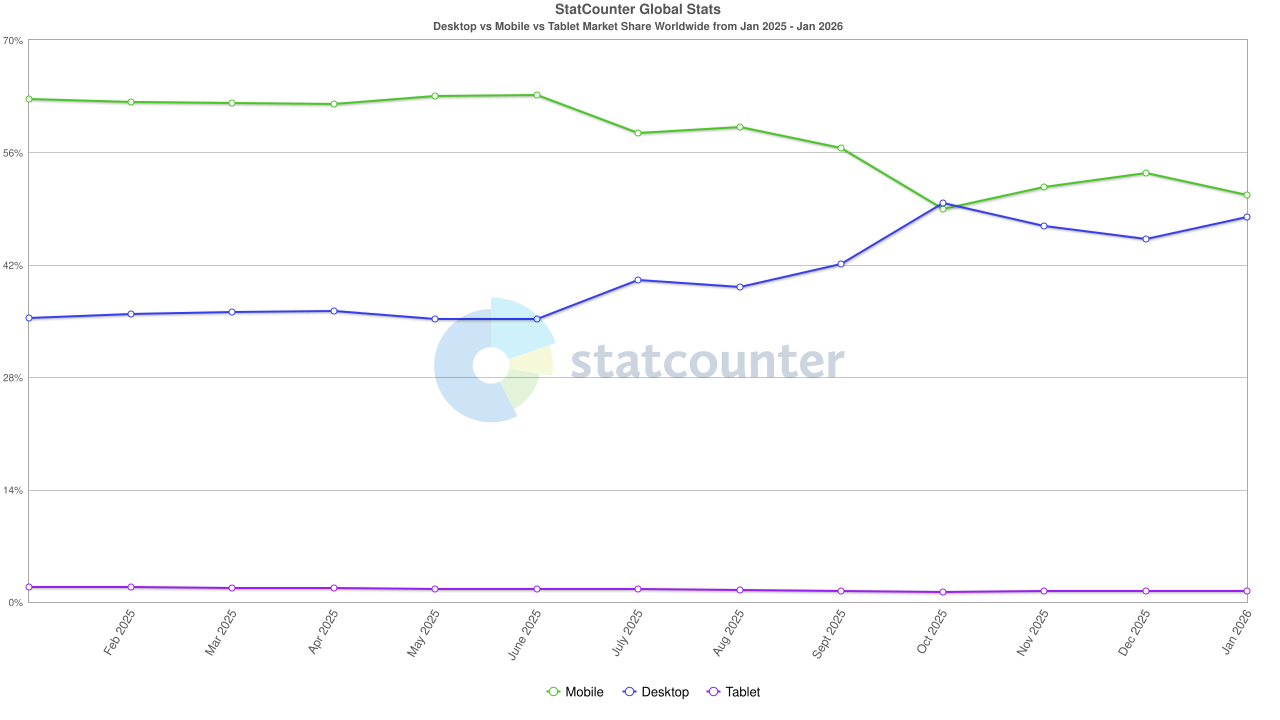
Mobile now accounts for the majority of global website traffic, making mobile-first strategies essential. This does not mean abandoning desktop users, but rather ensuring that both experiences are optimized and consistent.
Search engines prioritize mobile versions of websites when determining rankings. As a result, mobile SEO plays a critical role in visibility, performance, and user satisfaction.
Responsive design, fast load times, and content tailored to mobile intent are no longer optional. At the same time, desktop experiences should continue to support users seeking depth and detail.
Why understanding your audience matters more than ever
Generic digital strategies are no longer effective in a device-diverse environment. Businesses that understand how their audience behaves across mobile and desktop platforms can create more relevant content, improve engagement, and increase conversions.
By analyzing device-specific traffic patterns and engagement signals, companies can align their design, content, and marketing efforts with real user behavior and stay competitive in 2025 and beyond.